/filters:quality(90)/fit-in/970x750/coros-web-faq/upload/images/bba6f290954f7800c68037c648f573f7.jpg)
If there's one thing to know about Cooper Lutkenhaus, it's that he loves to run fast. Jogging isn't in his vocabulary. The high schooler and World Indoor Champion is one of the best 800m runners on the planet, and does it all with training principles that may seem against the grain in some ways, but fit him perfectly.
Low Mileage, High Output
Specialists in the 800 meters often have the most variance in training volume. Some thrive off of short, intense workouts, while others double that volume and train more like their longer-distance counterparts. Cooper finds a way to balance both.
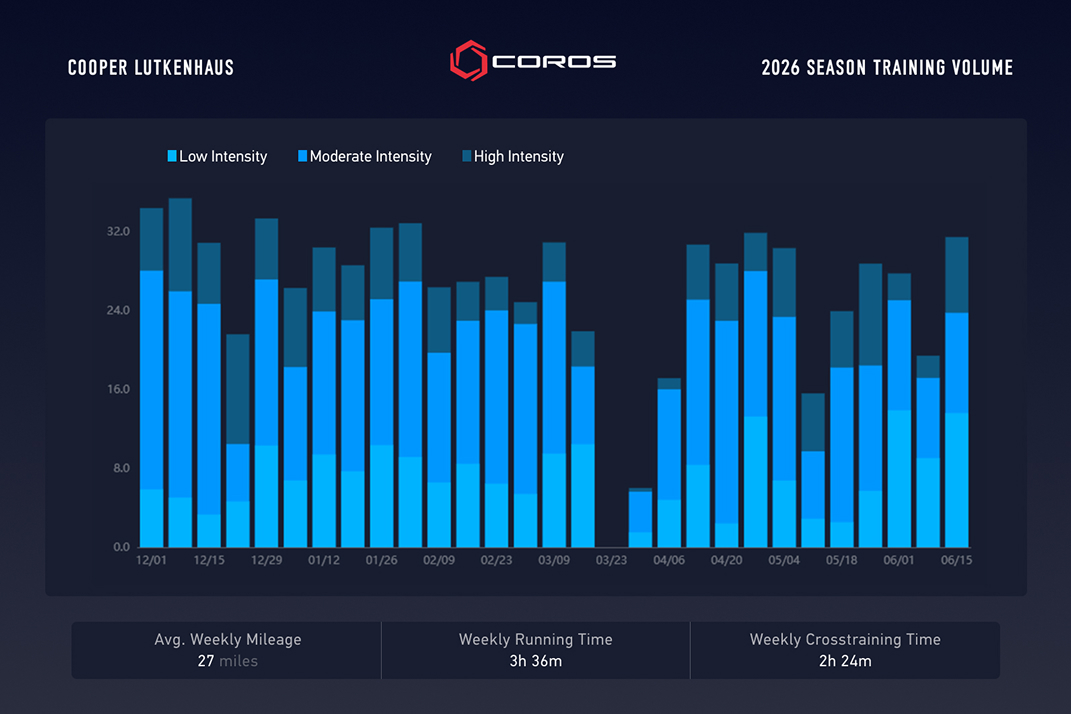
A typical week consists of 30 miles, with his longest days only reaching 6-7 miles. The low running mileage is offset by 2 to 3 hours of elliptical work per week, broken up across several days. That aerobic volume still gets done, it just isn’t all running. The elliptical allows Cooper to accumulate cardiovascular work without the additional impact load.
Ultimately, Cooper's training plan looks low-volume on paper but adds traits of a higher-mileage program.
A Plan That Adjusts
Cooper’s coach, Chris Capeau, sets the end-of-season goals and works backwards from there, mapping out key races or heavier training weeks. They know the overall work that needs to be done, but the day-to-day details are filled in close to when they happen, not months in advance. There is no fixed weekly structure that repeats through the season. Instead, the training adjusts based on how Cooper’s fitness is developing, and how he feels going into each week.
The number of track workouts in a given week reflects this. Cooper does anywhere from one to three harder sessions, depending on where he is in the training cycle and what his body is telling him. Some weeks call for more. Some weeks call for less. Races and travel, of course, factor into the equation as well.
Generally, Cooper's sessions fall into one of three categories: easy days, tempo sessions, and race-pace work. Each touches on multiple training stimuli, and none quite fit the mold of a 'typical' training run.
Easy Days
For someone who loves to run fast, easy runs can be anything but. However, Cooper still regularly works steady paces into his routine. For most easy days, he'll finish 4-6 miles at around 7:00/mi pace. If he feels good, he'll pick it up in the final mile or add some surges towards the end.
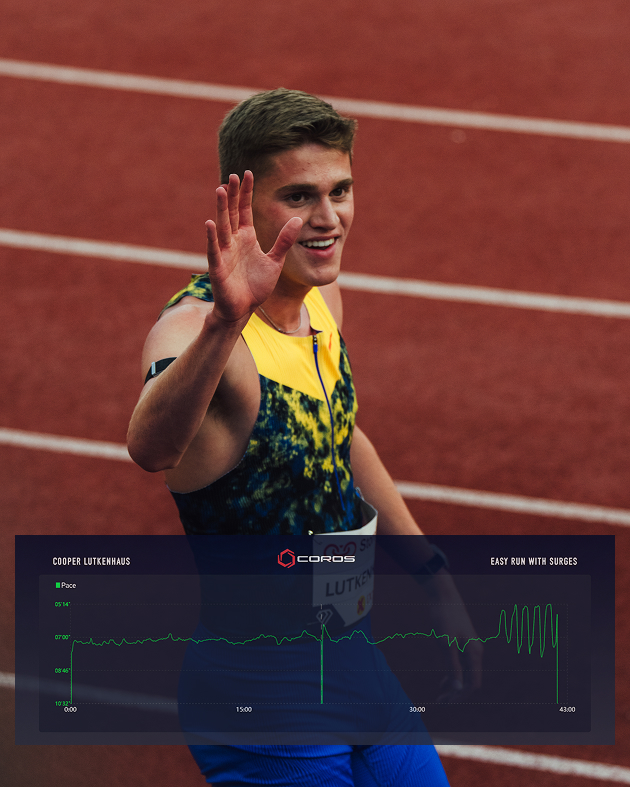
As mentioned above, Cooper also supplements most days with an afternoon elliptical session. These are typically easy and effort-based sessions that last 20-30 minutes.“For cross-training, heart rate's all that I worry about. I'm looking at it every other minute I feel like.”
Tempo Sessions
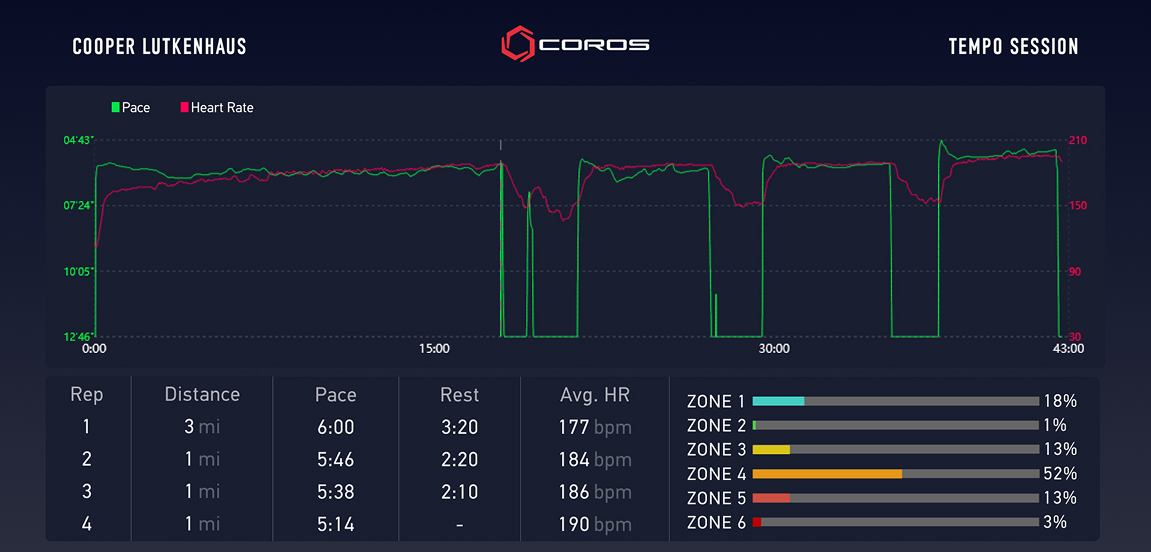
One of the more intense session types is tempo work. These sessions are structured with longer reps at moderate paces. If he's feeling good, Cooper will pick up the pace beyond his threshold towards the end. One example, shown below, has him running 3 miles at 6:00/mi pace, followed by 3xMile picking up the pace a little on each one.
Race Pace Work
The final session type is more specific and highly intense. These are built around 800-meter race pace and are also structured to progress in speed as the workout goes on. As Coach Capeau notes, "You would think as the workout goes, that maybe it gets rockier. But no, it gets better. He's probably one of the rare athletes where the workout gets better as he goes."
In a Workout Wednesday feature with Flotrack & COROS, Cooper ran a highly specific track session leading into his Diamond League victories in Stockholm and Oslo. It began with 2 miles steady, followed by 4 sets of 300m, 200m. To close, he spiked up for two quick 200s.
Drills, Dynamics, and Elasticity
What physically separates Cooper, even at the professional level, is his natural elasticity. He stores energy in his tendons and rebounds off the track in a way that only the all-time greats can replicate. The mechanical advantage shows up even when he’s running next to other professionals. Cooper’s team does a significant amount of dynamics, drills, and mobility work. The goal is to maintain and foster the physical quality that makes him deadly on the track.
The drills reinforce this, but the approach is deliberate about not overdoing it. His coach keeps the volume of this work limited. "We're not overstretching him, but we are treating him all the time, because we want to keep that pop and explosiveness that he naturally has." When in doubt, recovery is the preferred choice over additional stretching or activation work. Elasticity is something to develop and protect, not grind away at.
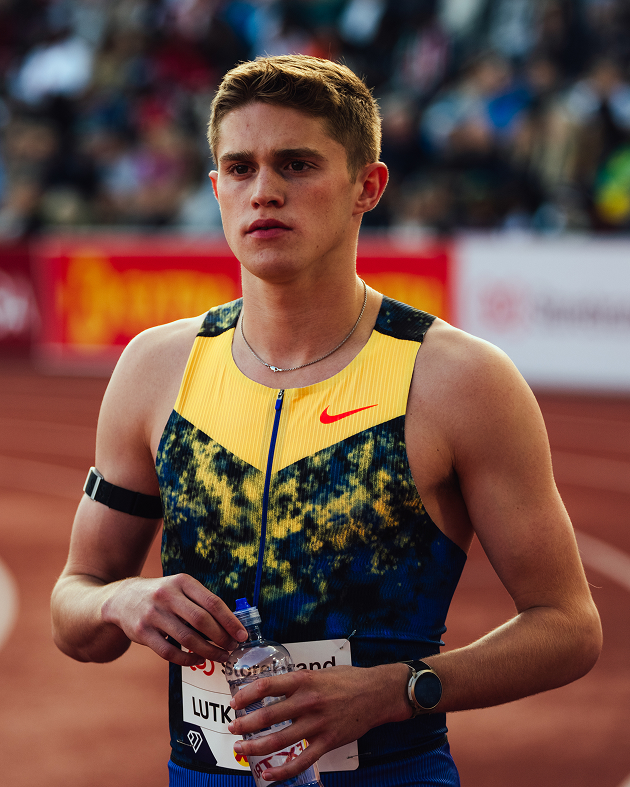
COROS is excited to support Cooper on this journey, offering tools to track his performance, support his recovery, and evolve with his needs over time, just like his training plan. As he put it: "The technology that you guys have been able to have in the past couple years (and I know it's definitely gonna grow over the next three years) it can make me a better athlete moving forward.”
We’re just getting started.